About van-Helsing.ai
Van-Helsing.ai is a platform for the algorithmic verification of information, particularly information that contradicts verifiable facts, whether intentionally or by mistake. One of the great challenges of our time is distinguishing truth from falsehood, a difficult task in the age of social media and artificial intelligence.
In the age of artificial intelligence, the trustworthiness of information is of essential importance:
- In the AI age, misinformation has exploded. It is often difficult to distinguish from trustworthy information. The result is a loss of orientation.
- To expose relevant misinformation as such, van-Helsing.ai uses algorithmic intelligence: the method of Algorithmic Validated Plausibility (AVP).
- The pilot project is the etymology of the word ‘algorithm’: the project proves that the widespread narrative of the al-Hwarizmi eponym is a speculative retrojection.
The platform is named after the two real-life models for the fictional character Abraham van Helsing. Bram Stoker himself said that the character of Abraham van Helsing was inspired by real people. The following are suspected to be the models:
- The courageous adventurer and secret agent Hermann Vámbéry. He lived in the 19th century, travelled to many countries and published various texts on languages, including a Turkish dictionary.
- The physician and enlightener Gerard van Swieten. He worked in the 18th century as the personal physician of Empress Maria-Theresia, among others. He was considered an astute enlightener in the fight against the vampire and superstition of his time.
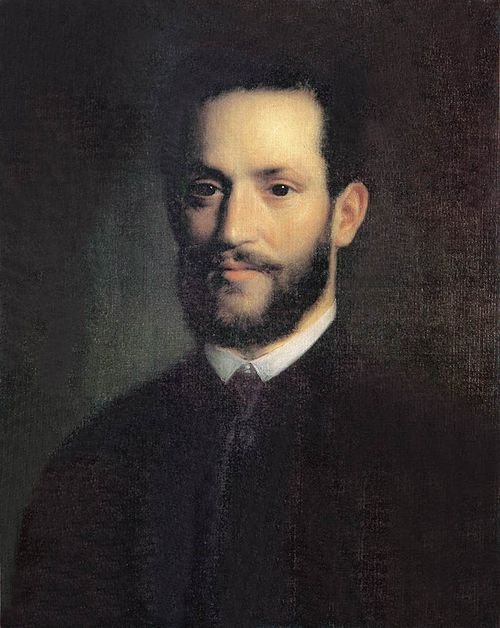
Hermann Vámbéry – Bildquelle: https://de.wikipedia.org
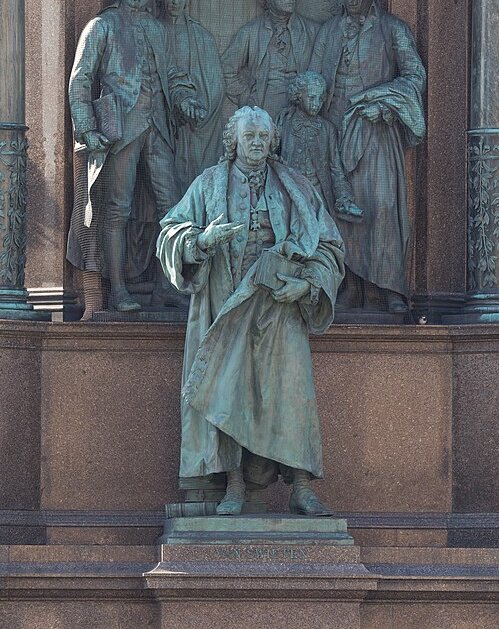
Gerard van Swieten – Bildquelle: https://de.wikipedia.org
Neither of these individuals used stakes, crosses or garlic to hunt vampire-like mythical creatures. Rather, their special qualities represent the principles required to expose and evaluate misinformation:
- a spirit of discovery and courage on the one hand.
- Accuracy and the search for causes on the other.
Another role model for this project is Spanish professor Federico Corriente Cordoba. The pilot project by van-Helsing.ai is dedicated to him because he had the courage to question, with good reason, a globally dominant but largely unsubstantiated thesis: the derivation of the word algorithm from the name of the Arab scholar Moḥammad ben Mūsā al-Ḫwārizmī. Corriete, on the other hand, took the view that the term originated from the Arabic ḥisāb al-ġubār: dust calculation or calculation with Arabic numerals. The study ‘The Odyssey from Algorizmi to Algorithm’ demonstrates why it took courage to represent and defend such a view.